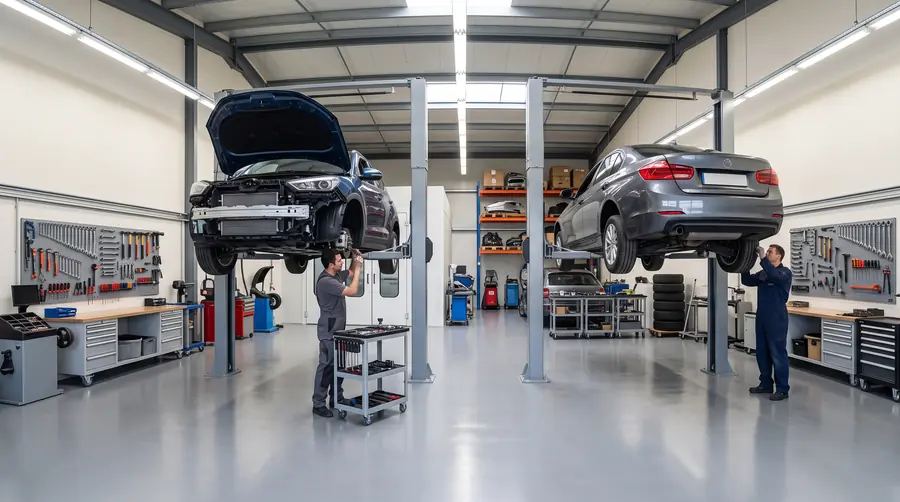
Labor rates in collision repair run from about $47 to $215 an hour depending on the market and the type of facility. On a job with 20 hours of labour, that is a swing of more than $3,000 before a single part is bought.
The high rate is not automatically a rip-off and the low one is not automatically a bargain. Here is what actually separates them.
What the rate buys
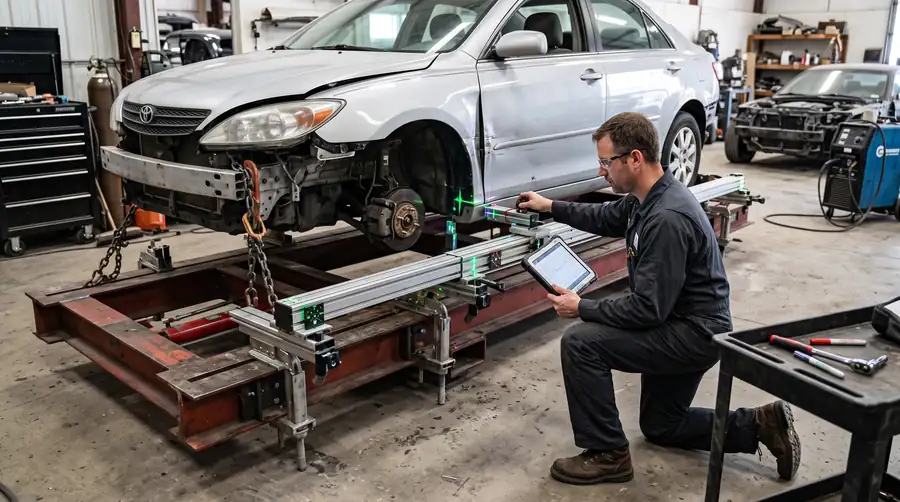
- Equipment. A frame bench, a downdraft booth, and ADAS calibration targets are expensive capital. A shop without them sublets that work or does not do it.
- Training. Manufacturer certification programmes require specific tooling and recurring training, particularly for aluminium bodies and high-strength steel.
- Throughput. A busy well-run shop may charge more and still return the car sooner, which matters if you are paying for a rental.
Signs of a shop worth using
| Signal | Why it matters | How to check |
|---|---|---|
| Runs a pre-repair diagnostic scan | Documents which systems the impact affected | Ask if it is standard and whether you get the report |
| Does or sublets ADAS calibration | Modern repairs are incomplete without it | Ask who does it and who warranties it |
| Offers a repairability assessment | An honest repair-vs-replace comparison | Ask for it in writing on the estimate |
| Sources recycled OEM | Saves $200-$600 on a cover while keeping factory fit | Ask what parts options they offered |
| Written warranty on workmanship | Paint and fit problems appear months later | Ask the length and what voids it |
None of these require you to know anything technical. They are all questions a service writer can answer in a sentence.
The insurer's shop, or your own?
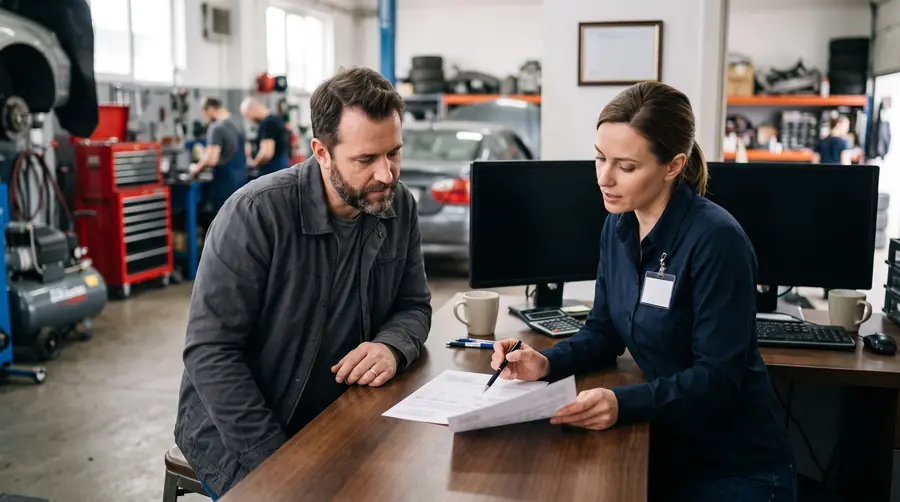
Your insurer will steer you to a network shop. Those shops have pre-agreed rates and the paperwork moves faster, which is a genuine convenience. You are generally not obliged to use one.
Going outside the network usually means more coordination and sometimes a gap between what the shop charges and what the insurer will pay. Ask both parties who covers that gap before the car goes in.
Reading an estimate like a sceptic
- Is the labour rate stated, and are the hours itemised? Rate times hours is most of the bill and both should be visible.
- Which parts are OEM, recycled and aftermarket? Line by line.
- Is calibration on here? If sensors are involved and it is absent, it is either coming later or not being done.
- How many panels are being blended? Each one adds roughly $150–$400.
- What happens if more damage is found? Agree whether a supplement needs your approval before work continues.
Estimate coming back higher than expected?
When a repair bill approaches what the vehicle is worth, it is worth comparing against replacement before you commit.
See vehicle pricingTwo things worth ignoring
A cheap quote that skips the pre-scan. It is not cheaper; it is less complete, and the difference shows up as a supplement later.
Pressure to decide immediately. A second estimate costs you an afternoon and routinely changes the number. There is no repair so urgent that it cannot wait for one.
Sources
- ERP SoCal, How Much Does Car Bumper Repair & Replacement Cost? — the $47-$215/hr labor rate range
- Brea Auto Body, Bumper Repair Cost 2026 Guide — repairability assessment, pre-scan practice, and parts sourcing
- Allstate, What to Expect When Filing a Car Insurance Claim — insurer network shops and rental coverage
Figures verified 3 September 2026. Costs change; always get a written estimate from a licensed shop before authorizing work.