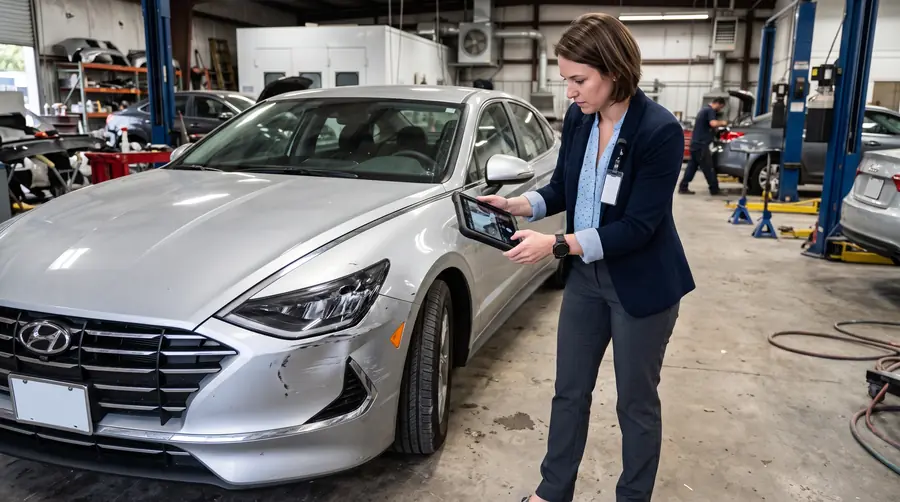
The deductible is the part people get wrong, and it is the part that decides whether a claim is worth filing at all.
What the deductible actually does
Your deductible is subtracted from the payout, not added to the bill. Allstate's own worked example: a $500 collision deductible against $1,500 of damage means the insurer pays $1,000 and you pay the remaining $500 to the shop.
Two consequences follow immediately:
- If the repair costs less than your deductible, a claim pays you nothing and still goes on your record. Most paintless dent work lands below a standard $500 or $1,000 deductible for exactly this reason.
- Just above the deductible is the grey zone. A $700 repair on a $500 deductible nets $200 — against a claim on your history and a possible premium increase at renewal. Run that arithmetic before you call.
The order it runs in
| Step | What happens | Who acts |
|---|---|---|
| 1. Report | Claim opened, number issued | You |
| 2. Inspect | Damage documented, often by photo or a drive-in centre | Adjuster |
| 3. Estimate | Repair scope and cost written | Shop and adjuster |
| 4. Authorize | You approve the work and the shop orders parts | You |
| 5. Supplement | Hidden damage found once panels come off | Shop |
| 6. Settle | Insurer pays the shop, you pay the deductible | All |
Step 5 is the one that surprises people. It is normal, not a sign of anything going wrong.
Supplements are normal
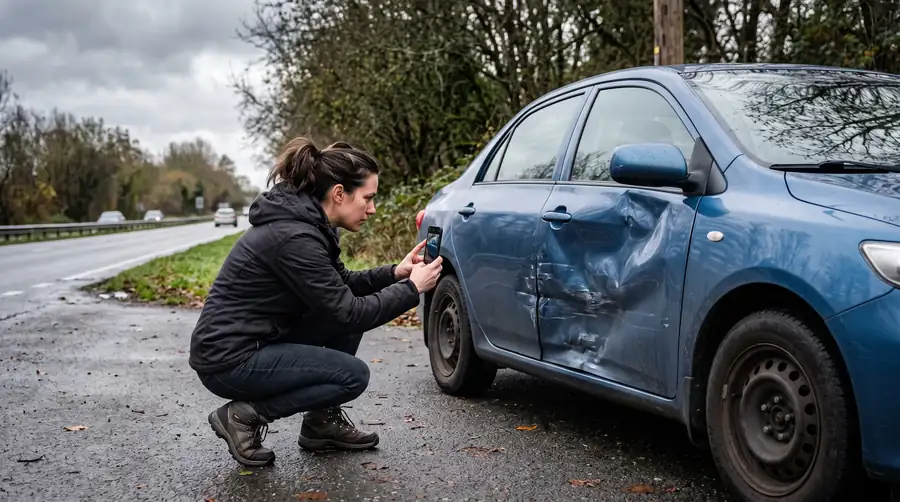
A written estimate is made from what is visible. Once the cover comes off, shops routinely find bent brackets, damaged absorbers or cracked mounts underneath. The shop then files a supplement to add that work.
Agree the rule in advance: does a supplement need your approval before work continues? Getting that answer before you authorize is the difference between a phone call and an argument about an invoice.
You choose the shop
Insurers maintain networks and will steer you toward them — those shops have pre-agreed rates and the paperwork is faster. You are generally not obliged to use one. If you go outside the network, expect more coordination and confirm who warranties the work.
Rental coverage, if you carry it
Many collision policies include rental reimbursement, typically in the range of $30–$50 a day up to a capped number of days. On a repair waiting for back-ordered parts, that cap matters more than the daily rate. Ask how many days are covered, not just the amount.
Settlement close to what the car is worth?
If the insurer's number is approaching your vehicle's value, it is worth knowing what that money buys before you commit to repairing.
See vehicle pricingBefore you file
- Get an estimate first. If it is below your deductible, there is nothing to claim.
- Photograph everything before anything is moved or repaired.
- Ask what a claim does to your premium. Your agent can usually tell you, and it is a real cost that belongs in the comparison.
- Keep every document. A diminished-value claim depends on proving what was damaged and what was repaired.
Sources
- Allstate, What to Expect When Filing a Car Insurance Claim — deductible mechanics and the worked payout example
- Brea Auto Body, Bumper Repair Cost 2026 Guide — supplements and rental reimbursement ranges
- Dentevo, How Much Does PDR Cost? — deductible thresholds on minor work
Figures verified 3 September 2026. Costs change; always get a written estimate from a licensed shop before authorizing work.