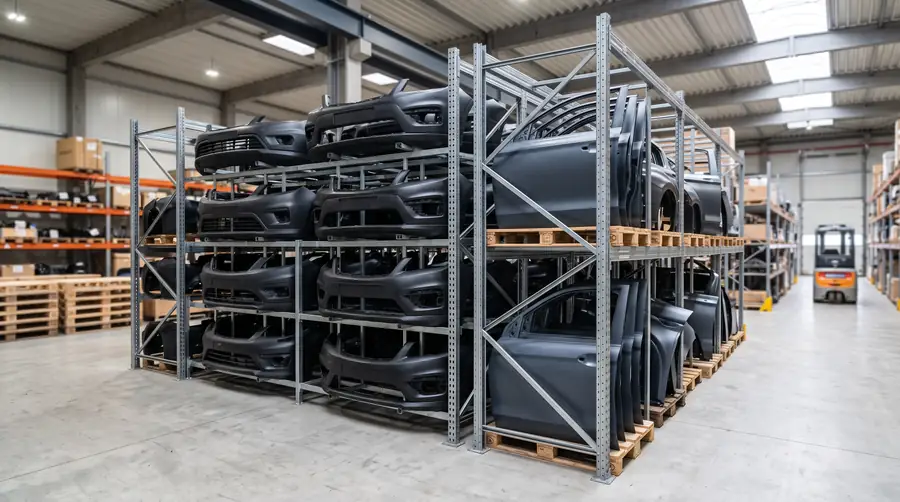
Somewhere in your estimate is a line specifying which parts go on the car. It is worth more attention than it usually gets, because it is one of the few places where you have a real choice and the price swing is large.
The three options
| Type | What it is | Relative price |
|---|---|---|
| OEM (new) | Made by or for the vehicle manufacturer | Highest — $400 – $1,500+ for a mainstream bumper cover |
| Recycled OEM | A genuine factory part from another vehicle, reconditioned | Often $150 – $400 less than new OEM |
| Aftermarket | Made by an independent manufacturer to fit | 20% – 50% less than OEM |
The gap widens on luxury and European vehicles, where OEM pricing is significantly higher.
What the saving can cost you
Aftermarket parts are legitimate and often perfectly good. The risks are specific rather than general:
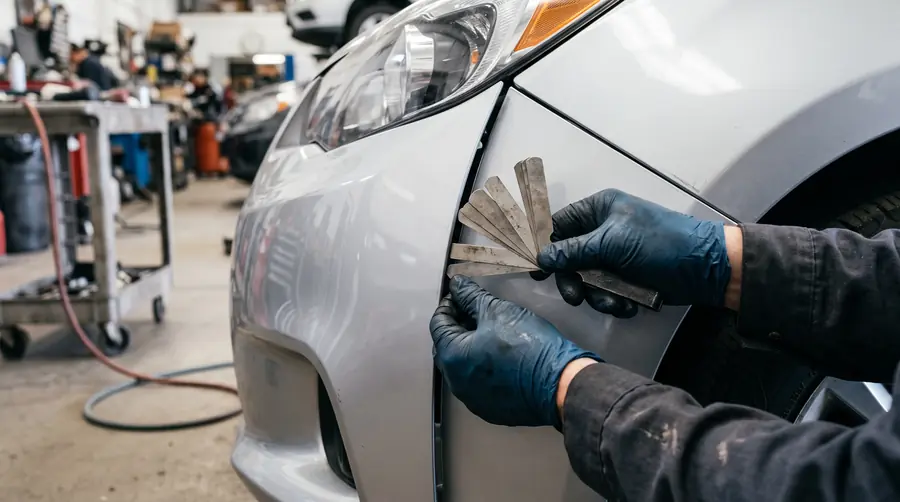
- Fit tolerance. Panel gaps that are slightly off are visible forever, and on a bumper they can affect how the cover sits against adjacent panels.
- Sensor and camera mounting. This is the one that matters most on a modern car. If a mounting point sits even slightly off, the sensor aims slightly off — and calibration may not resolve it.
- Finish and material. Paint adhesion and plastic grade vary between manufacturers.
The practical rule: on a panel with no sensors and no structural role, aftermarket is a reasonable saving. On anything carrying a radar, camera, or crash structure, the case for OEM or recycled OEM is much stronger.
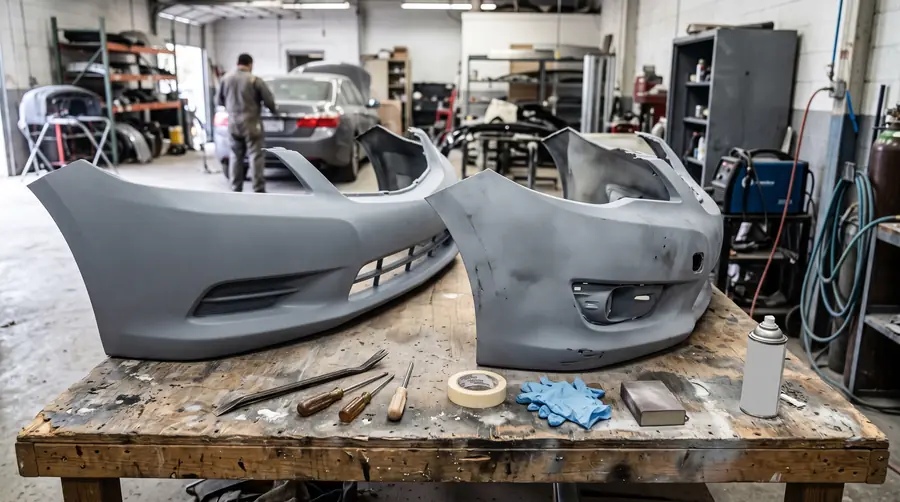
Recycled OEM is the underrated middle
A reconditioned factory part gives you genuine OEM fit and material at a meaningful discount — frequently $200–$600 less than new OEM on a bumper cover. It is the option most people never ask about.
Inspect before accepting: check for prior repair, filler, or damage on the part itself, and confirm who warranties it.
Your policy may already decide this
Many policies specify what the insurer will pay for, and aftermarket or recycled parts are commonly the default on older vehicles. Some policies offer OEM-parts coverage as an add-on. If you want OEM and your policy pays for aftermarket, you can usually pay the difference — but find that out before the parts are ordered, not after.
Parts bill stacking up on an older car?
When OEM parts on a high-mileage vehicle approach its value, replacing can be the better arithmetic.
See vehicle pricingWhat to ask
- Which parts are OEM, recycled and aftermarket? Line by line.
- Are recycled OEM options available for the expensive items?
- Does anything on this repair carry a sensor or camera? If so, push for OEM or recycled OEM on that specific part.
- Who warranties the part, and for how long?
Sources
- Bob Rohrman Collision, OEM vs. Aftermarket Parts — the 20-50% price differential and recycled-part positioning
- Brea Auto Body, Bumper Repair Cost 2026 Guide — OEM cover pricing, used-OEM savings, and fitment effects on calibration
Figures verified 3 September 2026. Costs change; always get a written estimate from a licensed shop before authorizing work.