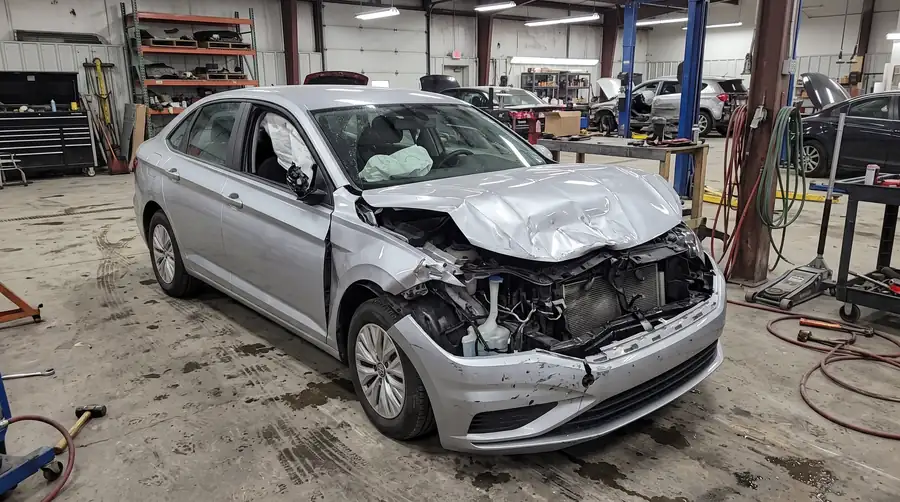
There is no national rule. Whether your car gets repaired or written off depends on which state you are in, and the spread is enormous — from 60% of the car's value in Oklahoma to 100% in Texas and Colorado.
Anyone quoting you a single national percentage is wrong.
The two methods states use
Simple percentage threshold. Once repair costs exceed a set percentage of the vehicle's actual cash value, it must be declared a total loss. A $10,000 car in a 75% state is totalled at $7,500 of damage.
Total Loss Formula (TLF). Repair cost plus salvage value is compared against actual cash value. A $20,000 car with $4,000 of salvage value is totalled once repairs exceed $16,000, and repaired below it.
| Threshold | States (selected) | A $10,000 car totals at |
|---|---|---|
| 60% | Oklahoma — the lowest in the nation | $6,000 of damage |
| 65% | Nevada | $6,500 |
| 70% | Arkansas, Indiana, Iowa, Minnesota, Wisconsin | $7,000 |
| 75% | Most states, including New York and Virginia | $7,500 |
| 80% | Florida, Missouri, Oregon | $8,000 |
| 100% | Texas, Colorado | $10,000 |
Thresholds are set by legislation and do change. Confirm your own state's current rule before relying on any figure here; several states use the Total Loss Formula instead of a flat percentage.
The practical effect is that the identical accident, on the identical car, produces a repair in one state and a write-off across a border.

Both numbers are arguable
The calculation has two inputs, and you can push on either:
- Actual cash value. Insurers use valuation tools that may miss your car's real condition, options, service history or recent work. Comparable local listings for the same year, trim and mileage are the counter-argument.
- The repair estimate. A high estimate pushes a repairable car over the line; a low one keeps a badly damaged car on the road. A second estimate from an independent shop is worth having.
If your car is totalled and you disagree with the valuation, most states give you a route to dispute it — often an independent appraisal clause in the policy itself. Read that clause before accepting a settlement.
What happens after a total loss
- The insurer pays actual cash value minus your deductible, and typically takes the vehicle.
- You can often retain the salvage instead, receiving the settlement less salvage value. The car then carries a salvage or rebuilt title, which permanently reduces its value and can complicate insuring it.
- If you owe more than the settlement, the shortfall is yours unless you carry gap coverage.
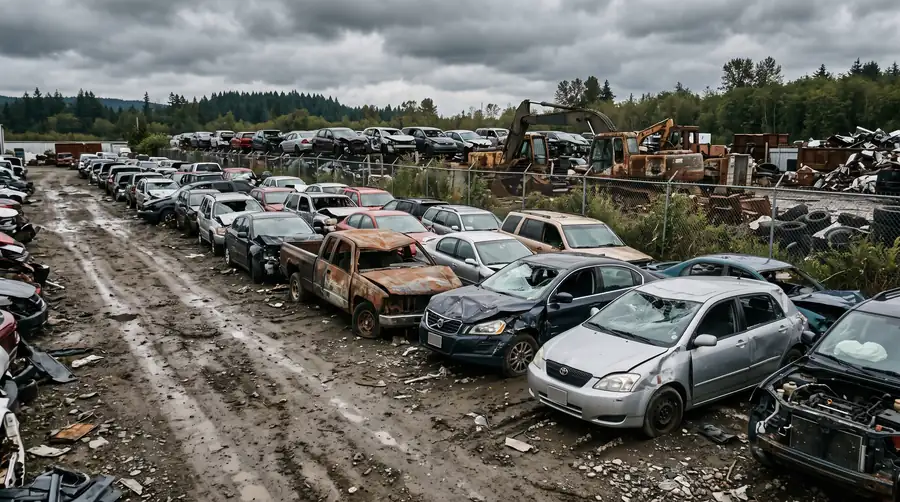
Car declared a total loss?
A settlement cheque is a buying decision. It is worth seeing what the money covers before it lands.
See vehicle pricingSources
- Policygenius, Total loss threshold by state (Updated 2026) — state-by-state thresholds and the two calculation methods
- Appraisal Engine, Total Loss Threshold by State — corroborating thresholds and Total Loss Formula worked examples
Figures verified 3 September 2026. Costs change; always get a written estimate from a licensed shop before authorizing work.